Why Does Ragi Dosa Sometimes Turn Hard? 7 Simple Mistakes to Avoid
The batter looks perfect and the pan is hot. Yet the dosa comes out stiff and dry.
Ragi dosa can be soft with lightly crisp edges, but the texture can change when a few small cooking steps are missed. Checking the batter, pan temperature, spreading method, and cooking time can help.
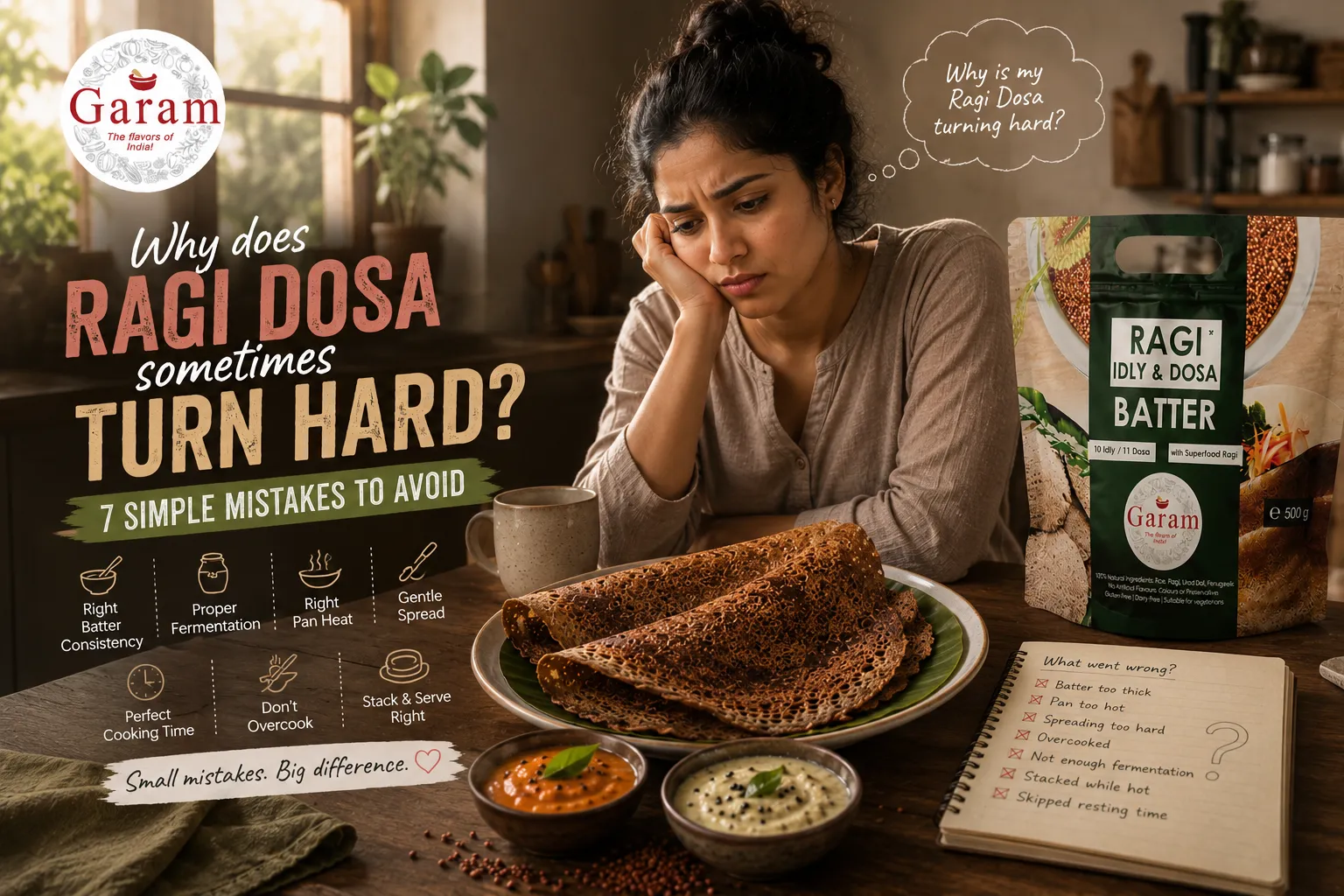
Here are seven common mistakes that can turn a good ragi dosa hard.
1. Making the batter too thick
This is one of the most common reasons for hard ragi dosa.
Ragi absorbs water differently from rice-based batter. If the batter is too thick, it becomes difficult to spread evenly. You may need to press it repeatedly, making some areas dense.
A thick batter also takes longer to cook, allowing more moisture to escape. The result can be dry.
The batter should be loose enough to spread easily without becoming watery. If it feels heavy when you lift the ladle, add a little water and mix before cooking.
2. Not adjusting the batter after resting
Ragi batter can become thicker after resting because the flour continues to absorb moisture.
This is why checking the batter just before cooking is important. Give it a good stir and check the consistency. If it feels thicker than before, add water gradually and mix well.
Avoid adding too much water at once.
3. Keeping the pan too hot
A very hot pan may seem ideal for making crispy dosa, but excessive heat can make ragi dosa dry.
High heat can firm the surface quickly, making the batter harder to spread.
Use a properly heated pan and control the flame. Moderate heat helps the dosa cook evenly while retaining moisture.
4. Spreading too aggressively
Ragi dosa batter does not always behave like regular dosa batter.
Pressing too hard or spreading for too long can make the dosa extremely thin in certain areas.
Spread gently and evenly. If the batter is difficult to spread, check its consistency instead of pressing harder.
5. Cooking the dosa for too long
Even with the right batter, overcooking can make a dosa hard.
Once the edges are cooked and the surface reaches the texture you prefer, remove it rather than cooking for several extra minutes.
Longer cooking means more moisture loss. Watch the edges and surface, and serve the dosa once it cooks and lifts easily.
6. Skipping proper resting or fermentation
Depending on the recipe or type of batter, resting or fermentation can influence the final texture.
Fermentation can change the batter’s structure and flavour. Too little fermentation may result in a denser dosa, while excessive fermentation can affect the batter’s texture and taste.
7. Stacking dosas incorrectly
Serve ragi dosas fresh. If making several at once, stack them loosely and avoid leaving them exposed.
The small details make the difference
A little attention before cooking often prevents dryness.
Ragi dosa does not need complicated tricks. Batter consistency, controlled heat, gentle spreading, and cooking time can help.
Sometimes, the simplest solution is a batter with carefully balanced consistency and fermentation. That is where Garam Foods fits naturally into the breakfast routine for families looking for familiar South Indian foods in Europe.
Garam Foods Ragi Idli & Dosa Batter can be used for ragi dosas, while Idly & Dosa Batter offers a classic everyday option.
Because getting a good dosa is not always about doing more. Sometimes, it is simply about getting the little things right.