What Is the Difference Between South Indian and North Indian Breakfasts?
Imagine two Indian kitchens waking up at the same time.
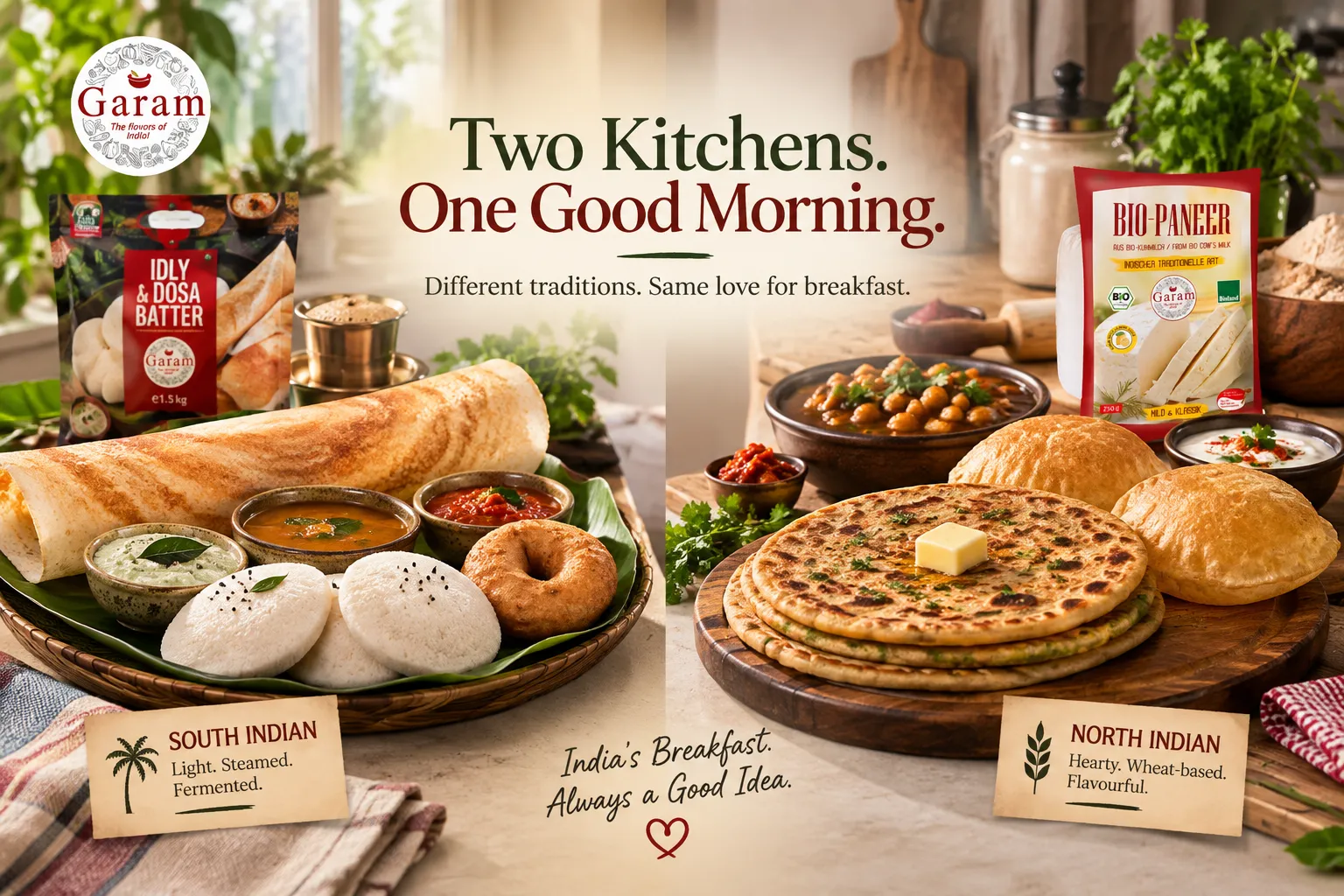
In one, a dosa is spreading across a hot tawa while the sound of a mixer fills the room. In another, a paratha is being rolled, folded and placed on a warm pan. The ingredients may be different, the cooking methods may vary, but both kitchens are preparing for the same thing — a comforting Indian breakfast.
This is what makes Indian breakfast interesting. There is no single way to begin the day.
South Indian Breakfast: Light, Steamed and Fermented
South Indian breakfasts are often built around rice, lentils, fermentation and steaming.
Think of idli, dosa, appam, pongal, vada and uttapam. Many of these dishes use fermented batters made from ingredients such as rice and urad dal. Fermentation gives the batter its familiar tangy flavour and also changes its texture, making dishes soft, airy or crisp depending on how they are cooked.
Idli is steamed, making it soft and fluffy. Dosa is cooked on a hot tawa, creating a crisp edge and a soft centre. Appam has its own character, with a delicate centre and lacy edges.
Breakfast is also closely connected with accompaniments. Sambar, coconut chutney, tomato chutney and podi can completely change the experience of the same basic dish.
In many South Indian homes, breakfast feels simple but never boring.
North Indian Breakfast: Warm, Hearty and Wheat-Based
Move to a North Indian kitchen and the breakfast table may look quite different.
Paratha, poori, stuffed roti, chole and cheela are common examples. Wheat flour plays an important role in many traditional North Indian breakfasts, while ingredients such as potatoes, paneer, vegetables and spices are often used to add flavour and filling texture.
Aloo paratha, for example, combines wheat dough with a spiced potato filling. It is rolled, cooked on a tawa and often enjoyed with curd, pickle or chutney.
Poori takes another route. The dough is rolled into small discs and deep-fried until it puffs up. Pair it with potato curry or chole, and a simple breakfast becomes a much more substantial meal.
Unlike the soft and steamed character of idli, many North Indian breakfast dishes are more bread-like, crisp or rich.
So, What Is the Real Difference?
The biggest difference is not simply South versus North. It is the ingredients, climate, local crops, cooking traditions and family habits that developed across different regions.
South Indian breakfasts commonly feature fermented batters, rice and lentils, with steaming and tawa cooking being important techniques.
North Indian breakfasts more commonly feature wheat-based doughs, stuffed breads, legumes and dairy, with tawa cooking and frying used frequently.
But there is plenty of overlap too.
Dosa can be found far beyond South India. Chole can be enjoyed anywhere. Families adapt recipes according to what is available, what they like and what they grew up eating.
That is why breakfast tells us something about Indian food culture: regional food may have different flavours, but the feeling behind it is often remarkably similar.
The Breakfast Connection Across Europe
For Indians living in Germany and other parts of Europe, these familiar breakfasts can bring back memories of home.
The smell of dosa on a Sunday morning, soft idlis on a busy weekday, or a hot paratha served straight from the tawa can remind someone of a kitchen, a family table or even a particular morning from childhood.
This is where products such as idly and dosa batter, ragi idly and dosa batter, appam batter and vada batter naturally fit into the wider story of Indian breakfast. They are not just different products; they represent different regional breakfast traditions that people continue to enjoy even when they live far from India.
And perhaps that is the most interesting part of Indian breakfast — whether the morning begins with a dosa or a paratha, it often begins with a little piece of home.
Garam Foods brings together familiar Indian food choices for Indian communities across Germany and Europe, making it easier to find some of those traditional breakfast favourites through local Indian grocery shops.