
How to Choose Good Quality Ghee: What to Look for Before You Buy
There is something comforting about opening a jar of ghee.
Maybe it reminds you of a warm dosa, rice with a little ghee on top, or the smell that filled the kitchen when someone was making sweets at home. Ghee has always been more than just another cooking ingredient. But when you stand in a supermarket today and see several jars on the shelf, one question naturally comes up: How do you know which ghee is actually good quality?
The answer does not always lie in the label or the price.
Start With the Ingredients
The first thing worth checking is surprisingly simple: the ingredient list.
Good ghee does not need a long list of ingredients. Traditionally, ghee is made by heating butter and removing its water and caramelising milk solids, leaving behind clarified butterfat.
So, when choosing a jar, look for a simple ingredient list and avoid products with unnecessary additives or unfamiliar ingredients.
A shorter ingredient list often makes it easier to understand what you are actually buying.
Look at the Colour — But Don’t Judge It Alone
Open a jar of ghee and look at its colour.
Good-quality ghee can range from pale yellow to a deeper golden shade. The colour can naturally vary depending on the milk, season, feed of the cattle, and the way the ghee has been prepared.
That means darker does not automatically mean better, and very pale does not automatically mean poor quality.
Colour is useful as an observation, but it should be considered together with smell, texture, ingredients, and overall quality.
The Aroma Tells a Story
This is where ghee becomes interesting.
Fresh, well-made ghee usually has a distinct buttery, nutty aroma. It should smell pleasant and inviting rather than overly strong, artificial, or stale.
You can often notice the difference as soon as the jar is opened.
Think of it like coffee. Before tasting it, you already get an idea of its character from the aroma. Ghee works in much the same way.
Pay Attention to Texture
Ghee can naturally have different textures depending on temperature.
At warmer room temperatures, it may become soft or completely liquid. In cooler conditions, it can turn firm or develop a grainy texture.
A slightly grainy texture is not necessarily a problem. In fact, traditionally prepared ghee can naturally develop small grains as it cools.
So instead of expecting every jar to look exactly the same, consider whether the texture appears natural and consistent with its storage conditions.
Check How It Has Been Stored
Even good ghee needs proper storage.
Before buying, check the packaging for its best-before date and storage instructions. Make sure the container is properly sealed and undamaged.
At home, always use a clean, dry spoon when taking ghee from the jar. Introducing moisture or food particles can affect its quality over time.
Keeping the jar properly closed also helps protect its aroma and flavour.
Don’t Let Price Make the Decision
It is tempting to think that the most expensive jar must be the best.
But price alone cannot tell you everything about quality.
Instead, compare a few simple things: the ingredient list, aroma, texture, colour, packaging, date, and how clearly the product information is presented.
A good purchase is usually one where you understand what you are getting—not simply the one with the highest price tag.
A Simple Ghee-Checking Habit
The next time you are choosing ghee, take a moment before putting the jar into your basket.
Read it. Look at it. Smell it. Then decide.
These small checks take less than a minute, but they can help you become more confident about the food products you bring into your kitchen.
And perhaps that is the nicest thing about choosing traditional foods today: you do not have to know everything about how they were made. You simply need to know what to look for.
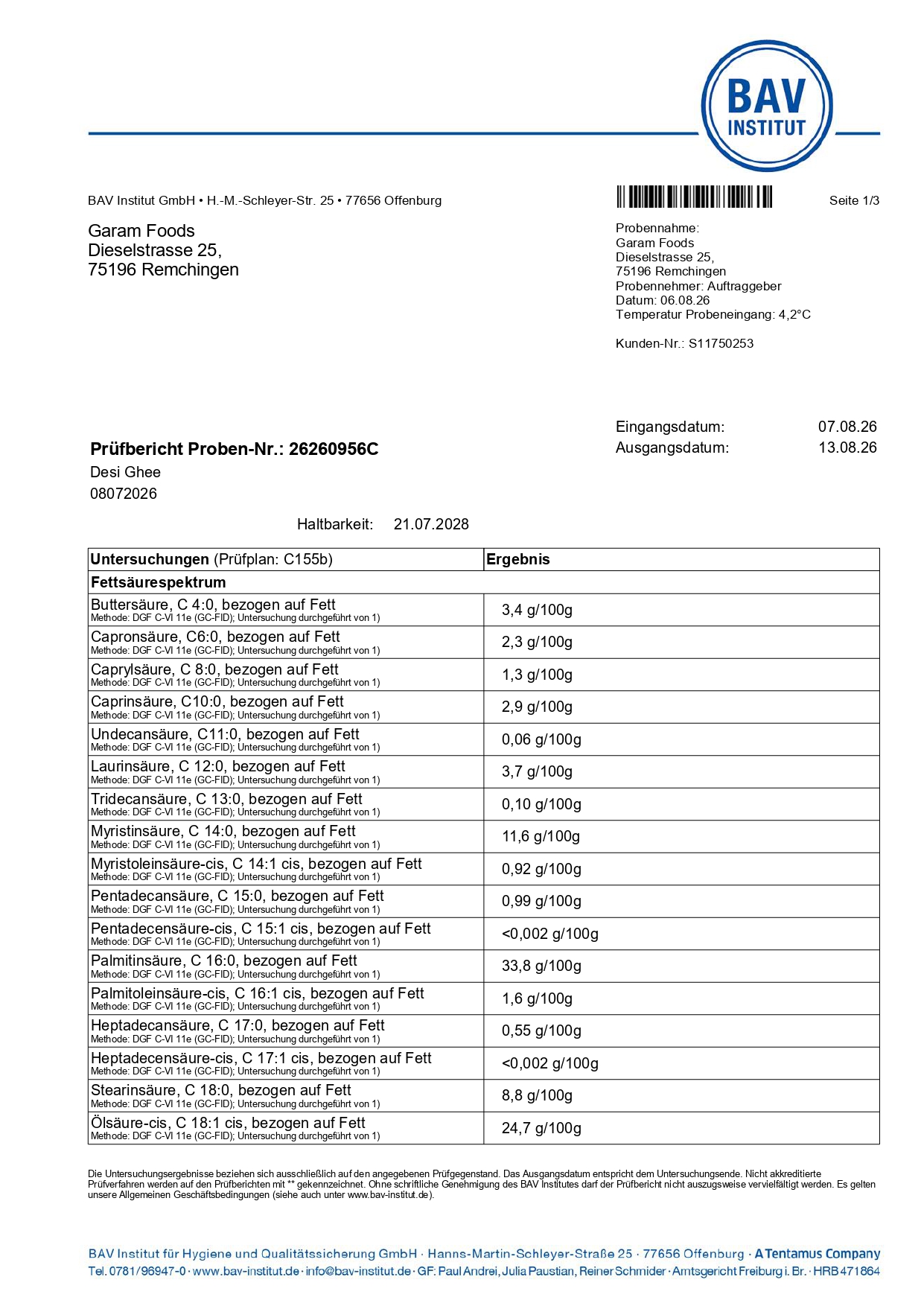
For households that enjoy familiar Indian flavours, Garam Foods brings together traditional food products made for everyday cooking, including Desi Ghee– where the milk solids are caramelised properly for its strong aroma and taste, something that can quietly find its place in everything from a simple breakfast to a comforting bowl of rice.
Sometimes, choosing good food is simply about knowing the little things that matter.