There are two kitchens we live in. One we grew up in. And one we’re still learning. The first one didn’t need measuring cups. Didn’t need reminders. Didn’t need time. Things just… happened. Breakfast was never a question. And someone always knew. The second kitchen is quieter. It waits for you to come back from work. It depends on your energy. It listens to your schedule.
And somewhere between both, you start missing something you can’t fully explain. Not just the food. But how effortless it all felt. This isn’t about going back. It’s about holding on —even when life moves forward. An article trying to recreate the memories from India to Europe.
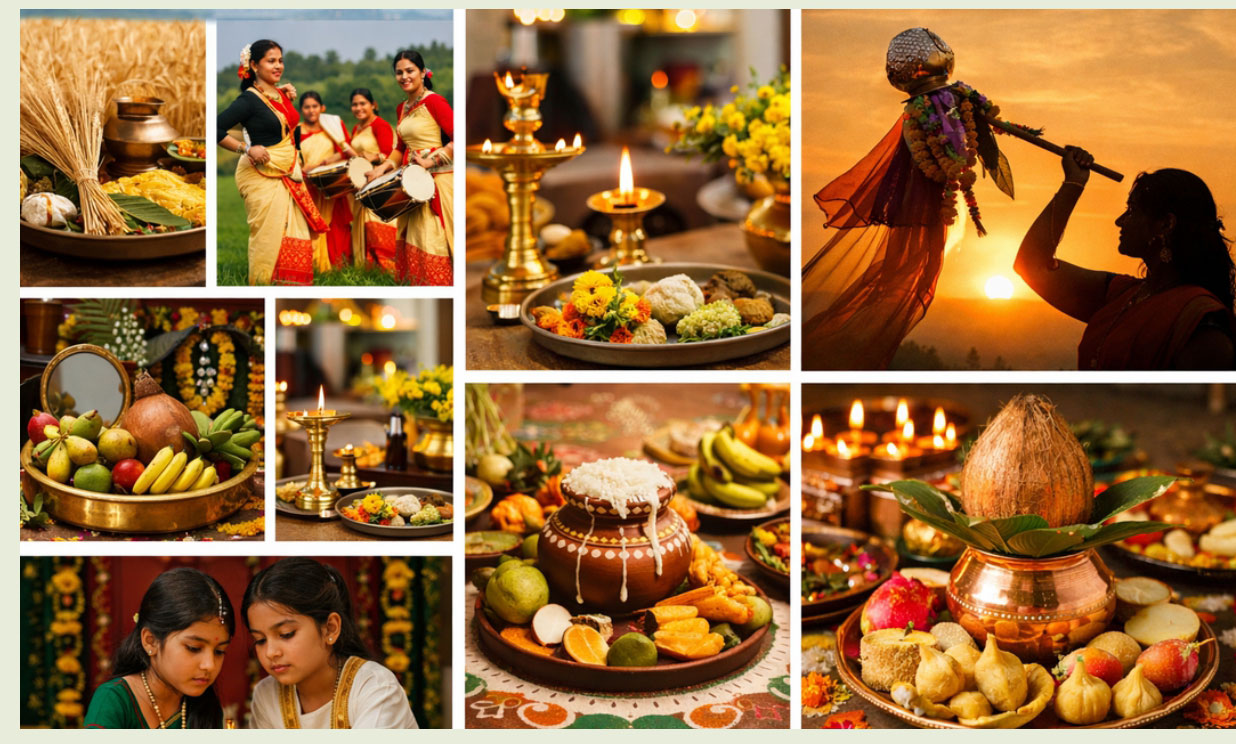
Somewhere around mid – March – April, in India, home starts celebrating something new. But not all at once. It has different names Its Ugadi in Andra, Vishu in Kerala , Puthandu in Tamilnadu, Poila Boishakh in Bengali, Vaisakh in Punjab, Pana Sankranti in Orissa, Bohag Bihu in Assam and much more….. And it arrives through many stories
In Tamilnadu, it is said that this was the day creation began — when time itself started moving forward under Brahma’s watch.
In Kerala, the year begins not with a clock, but with a moment — the first sight of carefully arranged abundance, seen before anything else, as if to set intention before life unfolds.
In Punjab, it carries the memory of courage, of a community coming together and choosing identity and strength.
In most parts of the country, it follows the harvest and sun path — a quiet acknowledgment that survival itself is worth beginning again for.
What connects all of them is not the ritual, but the understanding behind it. That a year is not just time passing. It is something you prepare yourself to receive. You see it in the way people arrange what they will first look at. In the way they accept every taste placed before them — sweet, bitter, sharp, unexpected. In the way they close old accounts and open new ones, not just in books, but in life. Maybe that’s why this new year feels different. It doesn’t promise that everything ahead will be good. It simply reminds you — whatever comes, you will take it in, make sense of it, and keep going. And somewhere between tradition and today that feels more relevant than ever.
In many parts of South India, the Regional New Years is marked with a special dish called Pachadi — a beautiful blend of six flavours. Each taste represents a different emotion, reminding us to embrace life in all its sweetness, bitterness, and everything in between and hear how it goes….
Pachadi – A Taste of Every Emotion
Wash tamarind and soak it in ½ cup warm water till it softens.
Melt ½ cup jaggery with 2 -3 tbps of water and strain it.
Mix 2 tbps of green unripe mango peeled and chopped , tamarind pulp , neem leaves, red chillies and salt together.
Boil it 5 minutes and the Pachadi is ready.
Fresh neem leaves are plucked from the neem trees in the morning of the festival and it is used. We know we don’t get fresh ones, so we can use the dried ones too.
This dish is a reminder to embrace all emotions and experiences throughout the coming year
A quiet truth
Not everything needs to be made from scratch to still feel like home. Serve it as neivedhyam or Pair it with your dosa
Do you know?
Some historians suggest a precursor to idli could be the Indonesian dish “kedli” which is a Savory rice cake steamed with lentil flour, potentially brought to India by cooks of Hindu kings, between the 7th and 12th centuries, which evolved into the fluffy, soft idli popular today.