Why Fermented Foods Are Loved Around the World
Every culture has a food that tells a story. Sometimes it’s a recipe passed down through generations, and sometimes it’s a cooking method that has survived for centuries. One of the oldest and most fascinating of these methods is fermentation.
Long before refrigerators and food preservation techniques existed, people across the world discovered that allowing certain foods to ferment naturally not only extended their shelf life but also transformed their flavour, texture, and nutritional value. Today, fermentation remains an important part of traditional cuisines from Asia to Europe, proving that good food often begins with patience.
Fermented Foods Across Different Countries
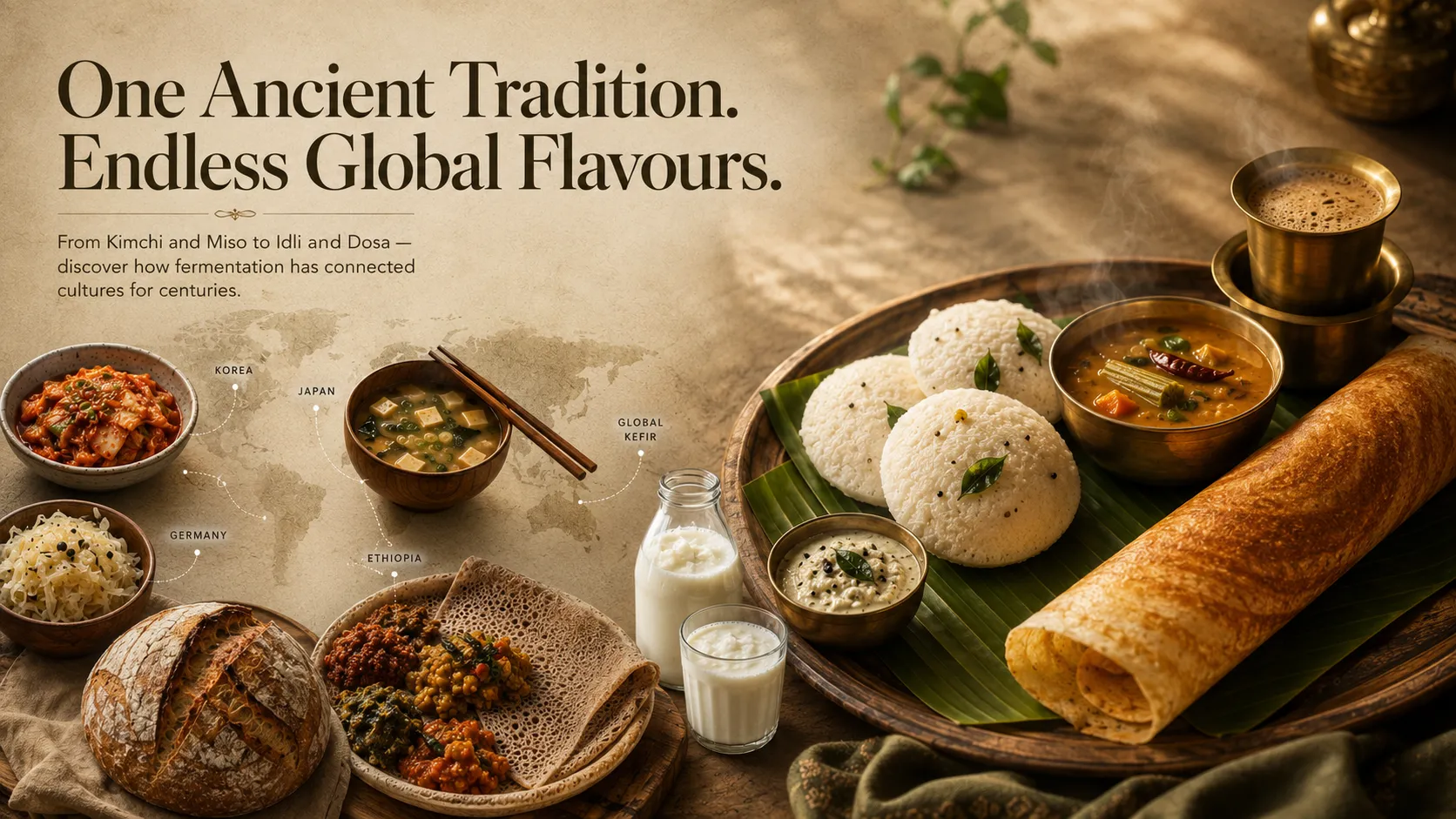
One of the best-known fermented foods comes from South Korea—Kimchi. Made with cabbage, radish, garlic, ginger, and chilli, kimchi has been prepared for centuries and is served alongside almost every meal. Every family has its own recipe, making it a symbol of Korean food culture.
In Japan, fermentation is at the heart of everyday cooking. Miso, produced from fermented soybeans, is used in soups, marinades, and sauces. Another traditional food, Natto, is made by fermenting soybeans and is valued for its distinctive flavour and nutritional benefits.
Across Germany and several parts of Europe, Sauerkraut has remained a household favourite for generations. Fresh cabbage is naturally fermented to create its signature tangy flavour, making it a popular side dish with many traditional meals. Europe is also known for Sourdough Bread, where naturally fermented dough gives the bread its unique taste and texture.
In Eastern Europe, Kefir has been enjoyed for centuries. This fermented milk drink is known for its creamy consistency and has become popular worldwide as people explore traditional fermented foods.
Travel to Ethiopia, and you’ll find Injera, a soft, spongy flatbread made from fermented teff flour. It serves as both a plate and a utensil for many traditional Ethiopian dishes, making it one of the country’s most recognised foods.
These examples show that while ingredients may differ from one country to another, fermentation has become a universal way of preparing wholesome, flavourful food.
South India’s Fermented Breakfast Tradition
India has its own rich fermentation heritage, especially in the southern states. Foods like idli, dosa, appam, and paniyaram are prepared using naturally fermented rice and lentil batter, a tradition that has been followed for generations.
The fermentation process helps create the soft texture of idlis, the crispy golden edges of dosas, and the light, airy consistency that makes these breakfasts so enjoyable. Prepared with simple ingredients like rice and lentils, these dishes continue to be favourites in homes across the world.
For Indians living in Europe, making these breakfasts often becomes more than a daily routine. It is a comforting reminder of family traditions and a simple way to stay connected to home while embracing life abroad.
Why Fermented Foods Continue to Be Popular
Despite changing food trends, fermented foods continue to remain relevant because they combine tradition with everyday practicality. Many are prepared using simple ingredients, require minimal processing, and develop rich flavours naturally over time.
Around the world, people also appreciate fermented foods for the variety they bring to meals. Whether it’s a bowl of kimchi in Seoul, a slice of sourdough in Germany, a serving of sauerkraut, or freshly steamed idlis in a South Indian kitchen, these foods demonstrate how different cultures have embraced the same timeless technique in their own unique ways.
A Global Tradition That Connects Cultures
Although every country has its own signature fermented foods, the idea behind them remains remarkably similar—taking everyday ingredients and allowing time to create something wholesome and delicious.
For Indian families living across Europe, traditional South Indian breakfasts continue to hold a special place at the table. They offer comfort, familiarity, and a connection to generations of home cooking while fitting naturally into modern lifestyles.
At Garam Foods, this tradition continues by bringing authentic South Indian fermented batters to families across Europe, making it easier to enjoy the wholesome taste of home wherever life takes you.