One Batter, Three Breakfasts: The Little Magic of South Indian Batter
There is something interesting about a South Indian kitchen in the morning.
A bowl of batter sits quietly on the counter. Nothing about it looks particularly exciting. It is just a pale, smooth mixture waiting for the pan, the steamer or perhaps a small paniyaram pan.
But that same batter can become completely different foods.
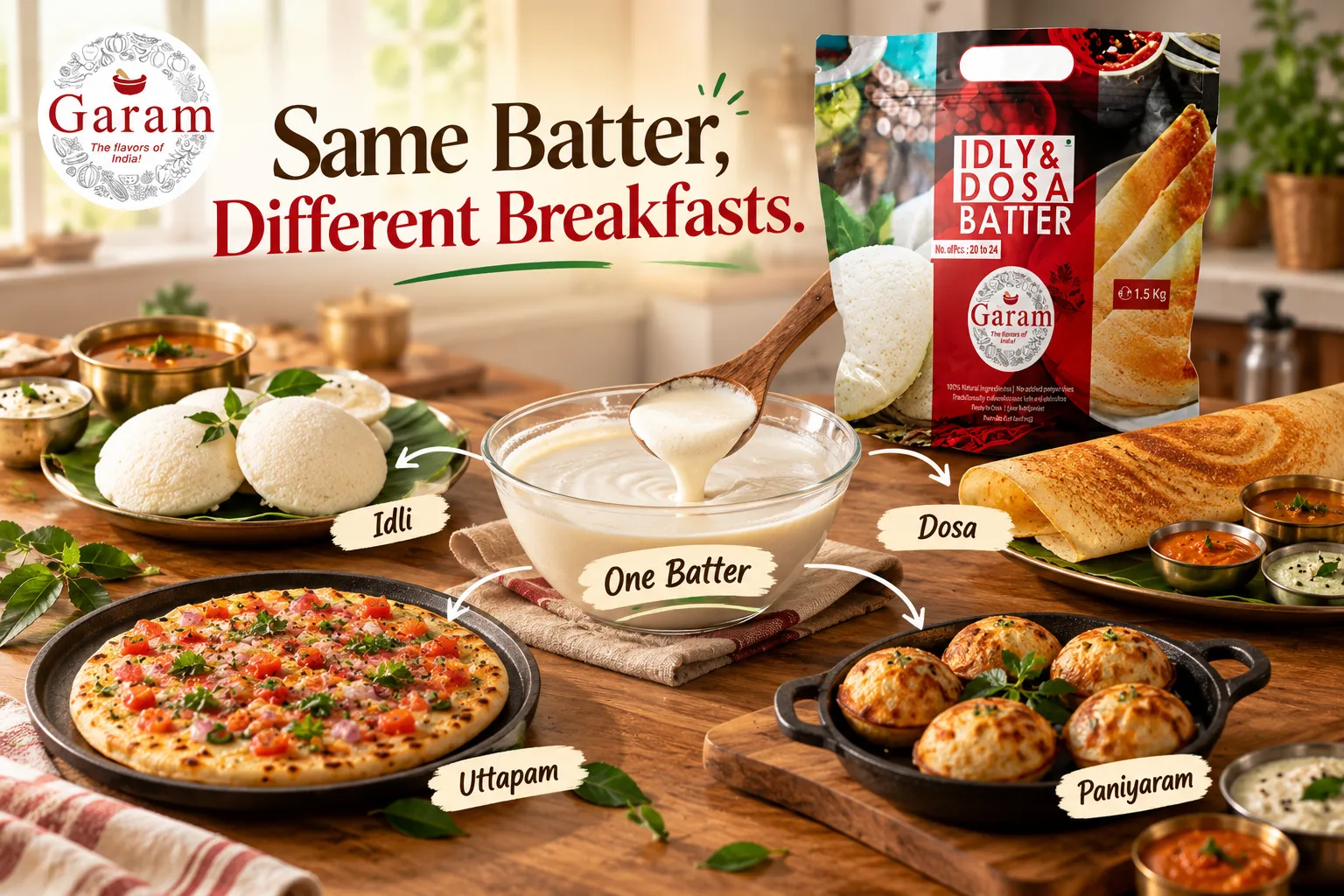
Steam it, and you have soft idlis. Spread it across a hot pan, and it becomes a crisp dosa. Make it a little thicker, add a few vegetables, and you have a comforting uttapam. Pour it into small moulds and suddenly breakfast turns into golden, round paniyarams.
One batter. Several possibilities.
That is one of the small things that makes South Indian cooking so clever.
It Starts With Fermentation
Traditional idly and dosa batter is not simply mixed and cooked. Rice and urad dal are soaked, ground and allowed to ferment naturally.
Fermentation is one of those everyday kitchen processes that many people grow up seeing without thinking much about it. The batter changes while it rests. Its texture develops, its aroma changes and it becomes ready for cooking.
Garam Foods follows this traditional soaking, grinding and fermentation approach for its batters, using simple ingredients rather than shortcut mixes.
And then comes the fun part.
The Same Batter Behaves Differently
For idli, the batter is kept thick and steamed gently until it becomes soft and fluffy.
For dosa, a little water changes everything. The batter becomes thinner and can be spread across a hot pan. The edges begin to crisp while the centre stays tender.
Uttapam takes the batter in another direction. Instead of spreading it thin, it is kept thicker and topped with ingredients such as onion, tomato, capsicum, carrot or green chilli.
And then there is paniyaram.
Small, round and crisp on the outside, paniyaram is one of those foods that can easily turn breakfast into an evening snack. It can be savoury or even sweet, depending on how it is prepared.
The interesting thing is that none of these foods needs a completely different batter.
It is the cooking method, consistency and little additions that create the difference.
More Than Just Breakfast
This is perhaps why batter has always had such a comfortable place in Indian homes.
A batch prepared earlier can become breakfast in the morning, a quick snack later in the day and sometimes even an easy dinner when nobody feels like making something complicated.
The idea feels especially familiar in a busy household. There is always someone asking, “What shall we make today?”
Sometimes the answer is already sitting in the refrigerator.
That simplicity also fits naturally into modern European routines, where breakfast and smaller eating occasions are becoming more flexible and convenience is increasingly important.
A Little Variety From One Familiar Start
Perhaps that is the real charm of South Indian batter.
It does not ask you to prepare something completely new every time. Instead, it gives you a familiar starting point and lets the kitchen decide what comes next.
One morning, it might be idlis.
The next day, crispy dosa.
On a quieter evening, paniyaram with chutney.
And when there are a few vegetables waiting to be used, an uttapam can suddenly become the answer.
At Garam Foods, this simple idea is part of why their Idly & Dosa Batter finds its way into everyday kitchens across Germany and Europe. The batter is prepared using the traditional process of soaking, grinding and fermentation, ready to become whichever version the kitchen happens to want that day.
Because sometimes, good food does not need more choices.
It just needs one good starting point.